QT Series Paving Block Press Machine
Sep 15, 2026
The QT series
paving block pressing machine from Haomei Machinery is specialized molding equipment designed for municipal walkways, city plazas, and roadways. Drawing on over a decade of global experience in delivering construction material equipment, QT series paver block press machine has been optimized to meet rigorous standards for density, wear resistance, and dimensional accuracy, making it a leading choice for municipal construction projects both domestically and internationally.
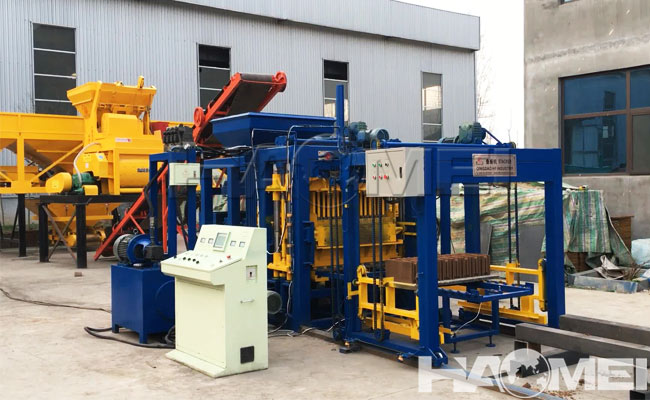
Mechanical strength and weather resistance are critical indicators for paving blocks and represent the primary strengths of the QT series paver block press machine. The
paver block machine equipment utilizes a composite molding process combining hydraulic pressing and high-frequency vibration; the main cylinder delivers a rated pressing force of 120–180 kN, while the vibration system operates at a stable frequency of 4,200–4,800 r/min. This ensures the thorough removal of internal air pockets, resulting in a dense and uniform internal structure. Under standard operating conditions, the finished paver blocks achieve a compressive strength of 30–45 MPa, a wear groove length of ≤28 mm, and a wear loss of ≤0.8 g/cm²—fully meeting the heavy-load requirements for urban secondary and even primary roads. With water absorption controlled to within 6% and freeze-thaw resistance ratings of F50–F100, the bricks are suitable for projects across diverse climatic zones, from temperate to cold regions.
High-precision molding capabilities ensure consistency and superior paving results of the produced paver blocks. The QT series paver block press machine features a servo-driven, quantitative material feeding system that offers high speed and uniform filling (with a filling uniformity error of ≤1.5%), effectively preventing issues such as uneven density or material shortages at the edges and corners from the outset. Paired with high-precision molds, the system maintains dimensional tolerances within ±0.3 mm and surface flatness deviations within ≤0.2 mm, while the strength dispersion coefficient for products within the same batch remains ≤5%. The resulting pavement features uniform joints and a flat surface, significantly enhancing the overall aesthetic of municipal projects while minimizing material waste from cutting during installation.
High-efficiency mass production and full automation capabilities offer significant reductions in operating costs. The flagship
QT8-15 and QT10-15 models feature optimized molding cycles specifically for road paver production. The QT8-15 model produces 16 standard pavers (200×100×60mm) per cycle, with a cycle time of 18–25 seconds and a stable output of 18,400–25,600 units per 8-hour shift; the
QT10-15 model produces 20 units per cycle, achieving a shift output of 23,000–32,000 units. The entire line utilizes a centralized PLC control system to automate the full process—including material feeding, pressing, demolding, conveying, and palletizing—requiring only 2–3 operators and delivering more than double the production efficiency of semi-automatic models.
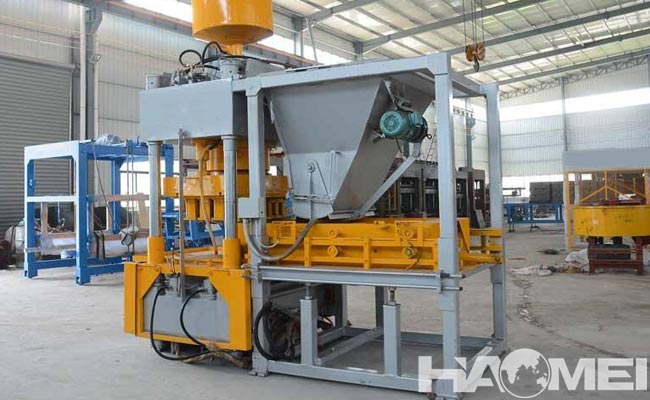
Flexible production capabilities and exceptional durability expand profit potential. The core molds are crafted from Cr12MoV alloy tool steel and undergo vacuum quenching and cryogenic treatment, achieving a surface hardness of HRC58–62 and a standard service life of over 1.2 million cycles. The paver block press machine supports rapid mold changes—with a changeover and commissioning time of 2.5 hours or less per set—and is compatible with the production of over ten types of municipal construction materials, such as interlocking pavers, permeable bricks, grass pavers, and curbstones, enabling customers to flexibly handle diverse project orders.
Years of experience in overseas municipal projects demonstrate that equipment adaptability directly impacts the pace of production launch. The frames of the QT series
paver block press machine are welded from thick Q345B steel plate and undergo stress-relief aging treatment, supporting 72 hours of continuous, full-load operation. Additionally, the machines support various voltage standards (e.g., 380V/415V) and offer optional high-temperature cooling and dust-proof sealing components, ensuring reliable, long-term stable production in environments across Southeast Asia, the Middle East, and Africa.




 (Chat Online)



