Bucket Type Concrete Batching Plants
Aug 13, 2026
In the selection of concrete batching plants,
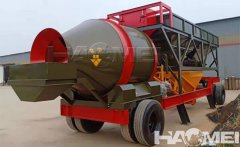
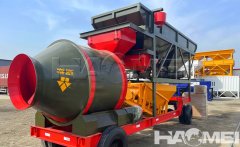
bucket type concrete batching plants are often labeled as "low-end and inefficient," and regarded as a cheap alternative to belt conveyor concrete batching plants. However, their core value is never simply low price, but rather the extreme space utilization and scenario adaptability brought by their vertical feeding structure—in scenarios with limited space, budgets, and discontinuous production, bucket concrete batching plants are actually the most cost-effective solution. Haomei Machinery's HZS series skip bucket concrete batching plants, with their mature vertical lifting design, serve various space-constrained construction scenarios worldwide.
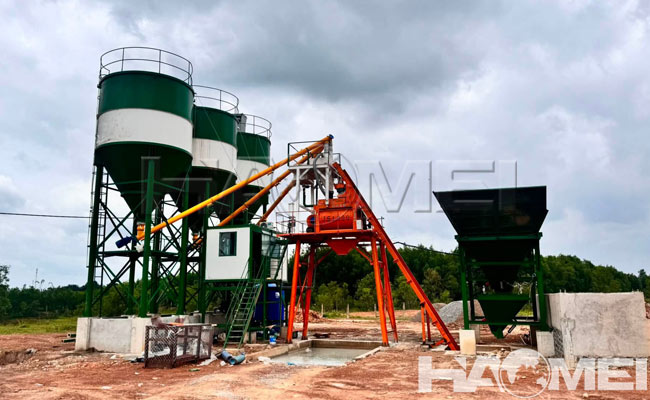
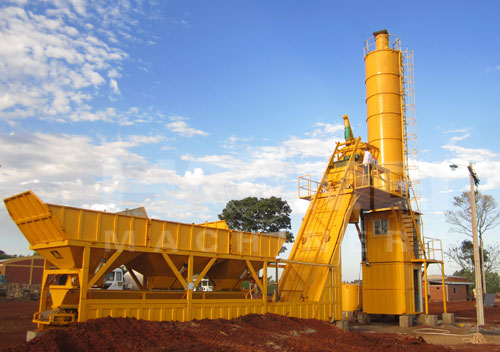
The most crucial feature of bucket concrete batching plants is the use of winch buckets to vertically lift aggregates, eliminating the need for the inclined conveyor corridors required in belt conveyor concrete batching plant models. At the same production capacity, bucket elevators require 30%-40% less horizontal floor space than belt conveyors. For example, the
HZS35 concrete batching plant occupies only about 9m x 5.5m, and the HZS50 concrete batching plant only 11m x 7m. This allows for integration into small construction sites in urban areas, renovation and expansion projects of old factories, and even remote areas with limited terrain, such as mountainous and mining areas. Simultaneously, the vertical layout significantly simplifies civil engineering requirements, requiring only a leveled and hardened ground surface and partial foundations for installation. This reduces civil engineering work by more than 30% compared to belt conveyors, resulting in shorter construction cycles and lower initial fixed investment.
Many people believe that bucket elevators have low production efficiency, but this confuses "continuous production rate" with "actual utilization rate." Bucket concrete batching plants use intermittent feeding, achieving a continuous full-load production rate of about 70%-80%, which is indeed slightly lower than the 85%-90% of belt conveyor concrete batching plants. However, this difference only becomes apparent during continuous production of more than 8 hours. For small-scale projects and rural commercial concrete mixing plants with daily production hours of 4-6 hours and intermittent batch feeding, the actual capacity utilization rate of bucket elevators is almost identical to that of belt conveyors. The core performance of the equipment is not compromised: all models are equipped with a JS series twin-shaft forced-action main unit, a standard mixing cycle of 60-72 seconds, an independent electronic weighing and metering system, aggregate error ≤±2%, powder and admixture error ≤±1%, fully compliant with EN 206 international concrete standards, and capable of stably producing C10-C50 grade ordinary concrete and pumped concrete.
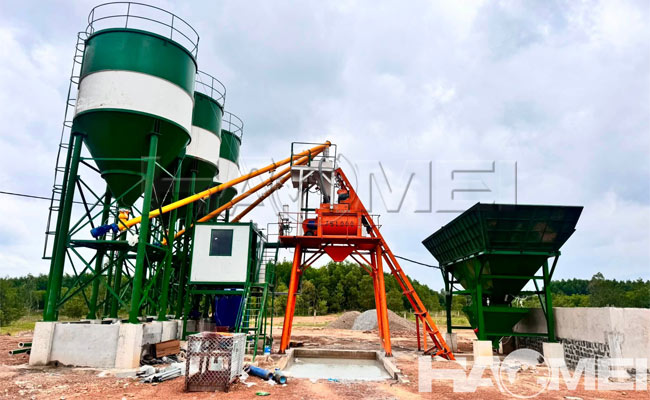
Compared to belt conveyors with numerous easily worn parts such as rollers, belts, and alignment devices, bucket elevators have a simpler structure and fewer potential failure points. Daily maintenance only requires inspection of the wire rope, buckets, and pulley blocks, reducing maintenance difficulty and consumable costs by more than 20%. Core wear-resistant components are made of thickened high-manganese steel, with the main unit liner having a normal operating life of over 7000 hours and the bucket liner replacement cycle reaching more than 2 years. From a full-cycle ownership cost perspective, the initial purchase price of bucket type concrete batching plant is 15%-20% lower than that of belt type concrete batching plant with the same capacity, and annual operation and maintenance expenses are about 20% lower, making them highly attractive to overseas small and medium-sized contractors and rural operators with limited budgets and weak professional operation and maintenance capabilities.
Haomei HZS series
bucket concrete batching plants are CE certified, support 380V/415V multi-voltage systems and multilingual operating interfaces, and are perfectly adaptable to standard container shipping after modular disassembly. On-site installation and commissioning can be completed in 5-7 days. Essentially, bucket type concrete mixing plants are not a "downgrade option," but a precise solution for space- and cost-sensitive scenarios—providing uncompromised core production capacity with a more compact layout and more controllable costs. This is the core reason why they have maintained stable demand in the global lower-tier markets for a long time.




 (Chat Online)



