What Are The Components of A Concrete Block Manufacturing Plant?
Jun 09, 2026
A modern, commercial concrete block manufacturing plant is not simply a combination of brick-making equipment, but a standardized, streamlined, and automated closed-loop production system. From a professional perspective of industrial production and overseas factory construction, a concrete block manufacturing plant that achieves mass production standards mainly consists of five core components: a batching system, a mixing system, a molding system, a conveying and palletizing system, and a curing and control system. The clear division of labor and coordinated operation of each system directly determines the stability of the production line's capacity, the quality of finished products, and production compliance, forming the core foundation for the block plant's large-scale profitability.

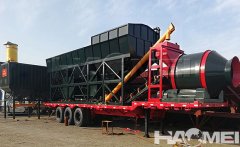
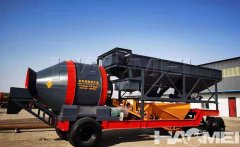
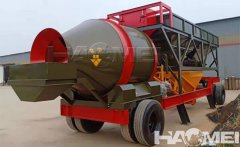
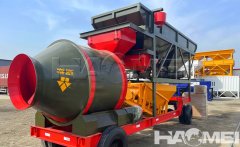
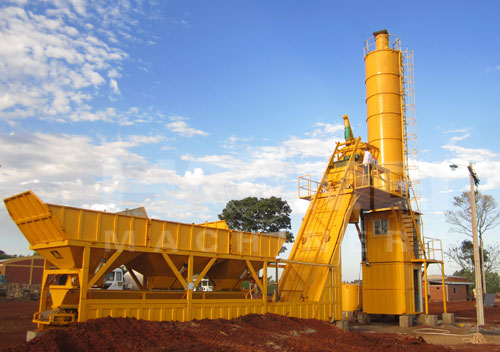
First is the fully automated batching system, the core of the concrete block manufacturing plant, which determines the basic quality of the blocks. This system consists of a multi-bin aggregate batching machine, a conveying mechanism, and a metering and control system, which can automatically and accurately weigh and proportion raw materials such as sand, gravel, fly ash, slag, and cement. Compared to the inherent errors and defects of traditional manual batching, this equipment utilizes computer-controlled intelligent metering, ensuring precise and controllable proportions. This avoids quality issues such as insufficient block strength, cracking, and color variations from the outset. It is also compatible with various industrial solid waste raw materials, aligning with global green production standards and meeting the environmental requirements of various countries.
Secondly, the centralized mixing system is responsible for homogenizing materials. Its core configuration is a forced concrete mixer, which comprehensively mixes coarse and fine aggregates, cementitious materials, water, and special additives, ensuring no lumps, uniform mixing, and consistent consistency. This uniform concrete slurry significantly improves the density and structural strength of the concrete blocks, guaranteeing that the finished product meets compressive and frost resistance standards. The entire system features a sealed dustproof structure, effectively reducing production dust and achieving a balance between high-efficiency production and environmental compliance.
Thirdly, the core molding production system is the core of the entire concrete block manufacturing plant's capacity. It uses the QT12-15 and QT16-15 fully automatic block making machines as its core equipment, combined with high-precision customized molds, high-frequency vibration devices, and a hydraulic compaction system. The equipment utilizes a dual process of high-frequency vibration venting and high-pressure hydraulic compaction to rapidly shape concrete materials, ensuring precise block dimensions and a dense texture. Simultaneously, the equipment supports quick mold changes, enabling the production of various types of blocks, including hollow blocks, paving bricks, and slope protection bricks, making it versatile and greatly enhancing the factory's market adaptability.
Fourthly, the automated conveying and palletizing system is a hallmark of modern mass production. The entire system includes an automatic demolding mechanism, a finished product conveyor belt, and an intelligent palletizer, automating the entire process of block forming, conveying, stacking, and placement. It completely replaces traditional manual handling, effectively reducing finished product breakage rates, significantly saving labor costs, and is suitable for 24-hour continuous and large-scale production, significantly improving production efficiency and uniformity.
Finally, the intelligent control and finished product curing system ensures long-term stable operation of the concrete block manufacturing plant. The PLC intelligent central control system centrally manages all equipment, enabling intelligent operations such as parameter adjustment, one-button start/stop, and fault self-diagnosis, lowering the barrier to manual operation. The finished product curing area is divided into natural curing and intelligent constant temperature curing modes, ensuring that the blocks are fully cured and their strength steadily reaches the required standard. The supporting warehousing zoning plan ensures orderly stacking and efficient delivery of finished products, guaranteeing a smooth connection between production and sales.
In summary, the standardized concrete block manufacturing plant relies on the coordinated operation of five major systems to form a complete production closed loop from raw material processing to finished product delivery. The entire system balances advantages in quality, capacity, environmental protection, and cost, meeting the block supply needs of various infrastructure projects and adapting to the construction standards and market production requirements of different regions worldwide.




 (Chat Online)



